
February 24, 2026
The NATO Innovation Fund co-leads €30m Series A for TYTAN to build Europe’s next generation air defence
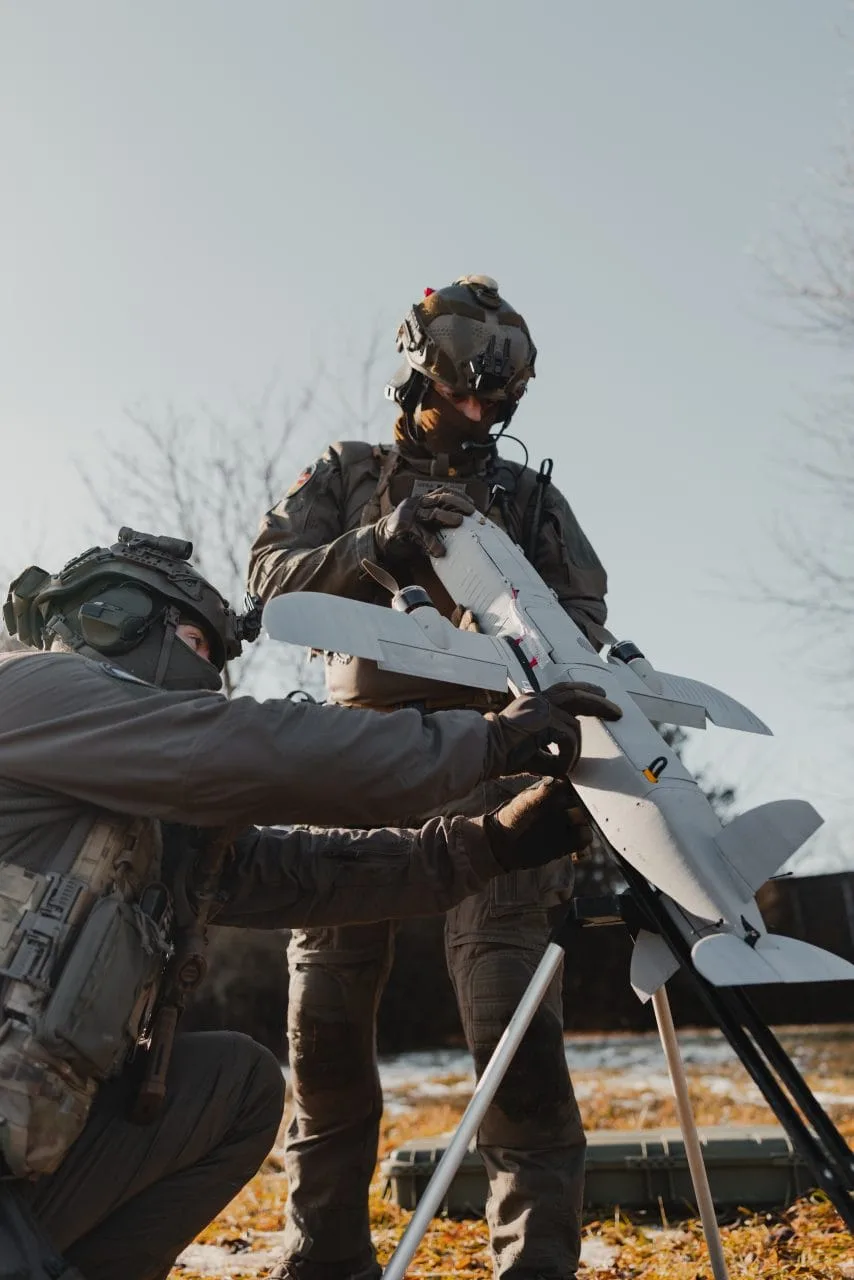
- Financing to help TYTAN Technologies defend NATO airspace at the speed, scale, and economics that today’s security environment demands
The NATO Innovation Fund co-led a €30m all-European Series A financing round to back TYTAN Technologies alongside Armira, with Visionaries Club, OTB Ventures, Lakestar, Magnetic, D3 and 10x Group. The financing will enable TYTAN to scale its manufacturing footprint across Germany, Ukraine and Allied markets, accelerate development of its AI-powered interceptor systems, and advance integration into all layers of air defence – including next-generation missile-based systems.

Europe is entering a once-in-a-generation reset in how air defence is designed, produced and deployed. This funding round is all about sustainably building the industrial and technological foundation for a sovereign, AI-enabled air defence architecture made in Europe for Europe.
A structural reset in European air defence
Modern mass drone warfare has exposed the limits of legacy air defence systems. High-speed, low-cost, and mass-deployed unmanned systems have fundamentally altered the economics of modern air defence. Such threats require new platforms built for autonomy, scalability, and interoperability from day one.
Ukrainian forces regularly report attacks involving hundreds of Shahed drones per day, with mass attacks sometimes exceeding 500 drones in a single night. Such dynamics necessitate defensive solutions capable of sustained mass deployment rather than episodic responses to high-value threats.
With confirmed orders from Ukraine and growing demand across Northern and Eastern Europe, TYTAN is scaling its manufacturing footprint and strengthening supply chain partnerships with European SMEs and defence primes, including Hensoldt, KNDS, Deutz, and Dedrone.

TYTAN’s air defence technology addresses an urgent capability gap for Ukraine and Allies alike, enabling them to defend their airspace, military bases and critical infrastructure against drone incursions cost-efficiently and at scale. NIF is proud to partner with the TYTAN team to defend the airspace across the NATO Alliance.
Building a sovereign European air defence architecture
Since its founding in 2023, TYTAN has operated actively in Ukraine and secured multiple government contracts, including procurement agreements to deliver thousands of METIS interceptor drones to its armed forces. In Germany, TYTAN has been commissioned by The Federal Office for Equipment, Information Technology and In-Service Support of the Bundeswehr (BAAINBw) to supply AI-based command-and-control infrastructure and effector systems for the protection of military installations.
Today’s Series A funding round reflects a broader structural shift in European defence, where private capital increasingly complements government procurement to accelerate technological sovereignty and industrial resilience across allied nations. TYTAN works closely with governments and industrial partners to serve as a scalable platform provider within Europe’s evolving air defence ecosystem.
Why TYTAN – A new, AI-enabled solution to counter a new threat
By David Ordonez, Senior Investment Associate and Patrick Schneider-Sikorsky, Partner at the NATO Innovation Fund
Over the last three years, the war in Ukraine has changed modern conflict. One of the clearest shifts has been the rise of cheap, mass-produced drones as a dominant asymmetric capability. Systems that cost a few thousand euros to build are now routinely used to destroy assets worth millions, overwhelm air defences, and disrupt both military operations and civilian life.
Meanwhile, drone incursions are increasingly disrupting airports, ports, energy facilities, and government sites across Europe. For example, repeated drone sightings have led to the closure of major international airports, causing significant economic disruption and highlighting how vulnerable civil infrastructure has become.
In both daily life and on the battlefield, NATO nations face a significant gap in their ability to defend critical infrastructure cost-effectively against mass drone attacks. The need for systems that can protect forces in combat while also being deployed around cities, airports, power plants, and data centers is clear.
TYTAN is developing a new generation of AI-guided, low-cost interceptor drones, paired with a software-defined integration layer that connects directly into existing radar and command-and-control systems. At the core of the system are TYTAN’s interceptor drones. These are medium-range interceptors designed specifically for NATO Class I and II unmanned aerial threats, including Shahed-type drones. They can engage targets at large ranges, at speeds sufficient to intercept Shaheds, while maintaining an affordable unit cost, making it economically viable to defend against mass drone attacks.
In addition, the company’s integration software connects the interceptors to existing radars, sensors, and battlefield management systems, enabling rapid deployment, multi-vendor interoperability, and fast iteration.
This combination of hardware and software positions TYTAN not just as a drone manufacturer, but as a critical enabler of modern Counter-UAS (C-UAS) architectures.
Related articles
February 10, 2026

July 10, 2026

July 8, 2026

July 7, 2026