
April 15, 2026
NIF-Backed 2D Photonics Receives €211 Million Grant to Fix One of AI’s Biggest Bottlenecks: Increasing Interconnect Bandwidth whilst Reducing Power Consumption
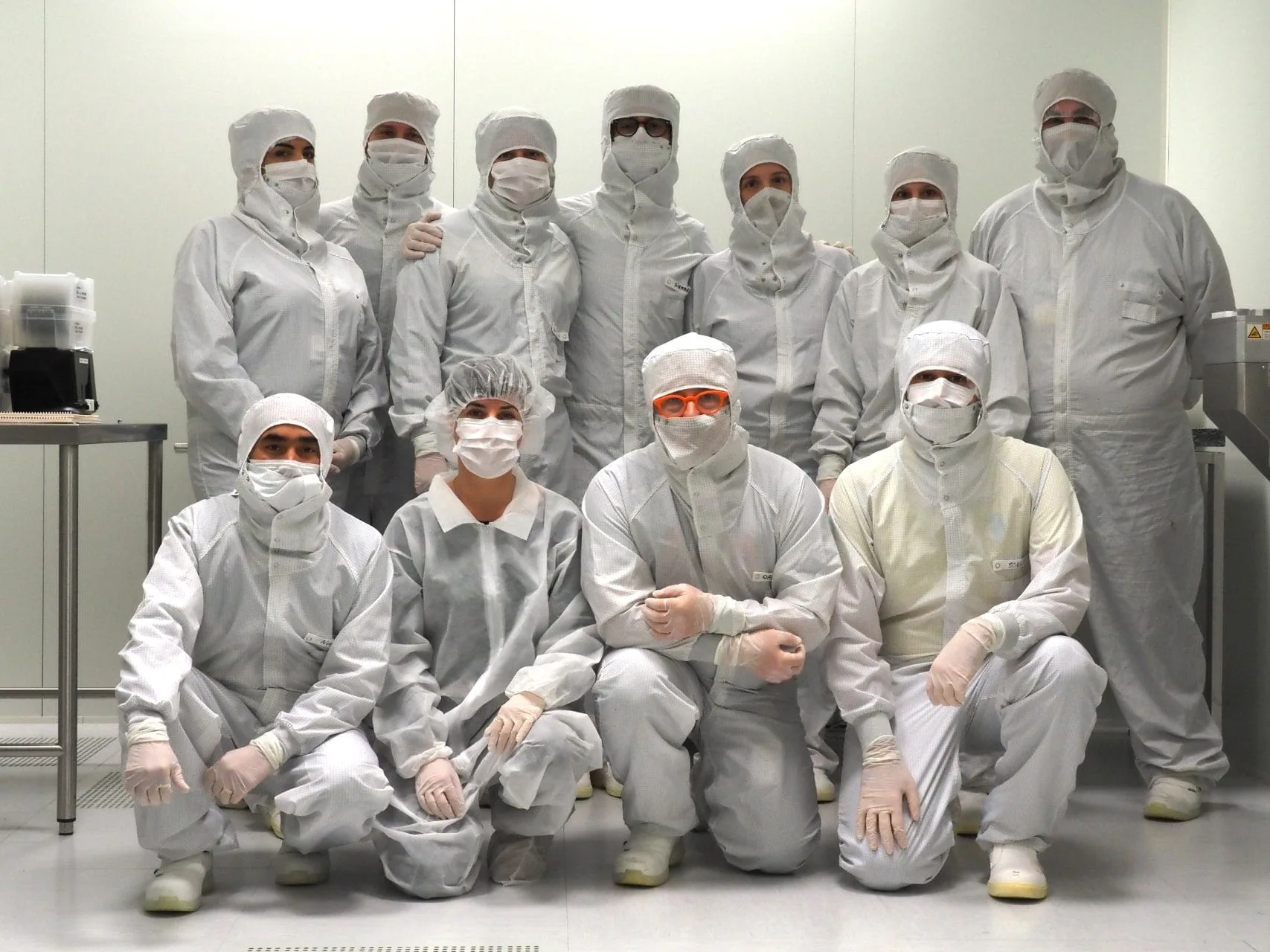
- In a future where optical communication must move closer to the processor to sustain AI performance , 2D Photonics is aiming to reset the limits of bandwidth, power efficiency, and scalability inside next-generation compute architectures.
Milan-based 2D Photonics has received approval by the European Commission for €211 million in funding by the Italian State to build a new class of optical technology designed to solve one of artificial intelligence’s most pressing physical limits: how data moves inside advanced computing systems. The aid measure will be one of the largest single public investments ever made in an Italian deep tech startup, placing the company among a small group of companies globally working to redefine how data is moved inside future AI infrastructure.
Today’s AI systems are no longer held back by a lack of computing power. Instead, performance is increasingly constrained by the flow of data between chips, accelerators, and memory. As models grow larger and hardware becomes more dense, existing electrical and silicon photonic interconnects struggle to keep up, consuming more power, generating more heat, and slowing systems down.
CamGraPhIC, the wholly owned subsidiary and research arm of 2D Photonics, is tackling this problem head-on with graphene-based optical input/output (Optical I/O) technology that replaces existing slower, power-hungry, and high latency optical links. By using graphene, a material with exceptional electronic and optical properties, the company’s approach enables a large increase in bandwidth density, whilst delivering lower latency and significantly lower energy consumption compared to the best silicon photonics available today, directly addressing one of the biggest obstacles to scaling AI and high-performance computing.

This investment goes straight to the heart of what’s limiting AI today. Compute keeps getting faster, but data movement hasn’t kept pace. Graphene-based optical technology offers a way to move vastly more data using far less power, which is exactly what the next generation of AI systems will require.
2D Photonics can help drive AI forward by improving energy efficiency, performance, and bandwidth. This grant helps Italy – and more broadly, NATO nations – remain independent and competitive in the AI era.
Next-generation AI systems – including those used in defence and national security applications – will require interconnect technology that is both high-performance and sourced from trusted supply chains. This aid measure positions Europe to supply that capability from within the Alliance. While the project strengthens the resilience of Europe’s semiconductor ecosystem, its relevance extends well beyond the region, targeting a challenge faced by AI systems worldwide.
The funding, under the European Commission’s State Aid Framework for research and development and innovation, will be used to industrialise CamGraPhIC’s optical interconnect platform for deployment in AI accelerators, high-performance computing systems, and advanced data centres, where bandwidth density and energy efficiency have become critical bottlenecks.
A key pillar of the project is the construction of a pilot manufacturing facility near Milan, designed to take graphene photonics from advanced research into real-world production. The facility will support device qualification, early manufacturing runs, and eventual transfer to high-volume foundry processes, creating a direct pathway from lab to large-scale deployment.
The project is expected to create over 150 highly skilled jobs across photonics engineering, materials science, and semiconductor manufacturing. The pilot line is scheduled to become operational in 2028 enabling early engagement with system integrators and computing platform providers.
In addition, the grant is helping the company grow its research and development capabilities in Pisa.
Related articles
February 10, 2026
September 17, 2026

July 29, 2026
July 17, 2026